2012 Troy Lee D3 Composite Review
Monday, January 23, 2012 at 8:43PM The next generation of action sports protection, the brand new D3 Helmet is the pinnacle of style and safety. A technologically advanced Composite shell and titanium hardware gives the D3 a featherweight feel. 20 high-flow intake and exhaust ports, including a revolutionary injection-molded intake system, combine with new deeper EPS channeling to provide optimal ventilation.
Features
- Dual Density Shock Pad System™
- Removable, Washable MX-style padded liner
- Coolmax™ and Dri-Lex™ moisture-wicking materials
- Quick-release cheek pads for emergency helmet removal
- Purpose-built internal cavities for audio integration
- Full incremental sizing based on motorsports provides greater range of fitment
- Exceeds bicycle and snow safety certifications: CPSC 1203, CE EN1077, CE EN1078, ASTM F1952, ASTM F2032, ASTM F2040
"It's been over 10 years since Troy first introduced the D2, and during that time TLD has accumulated valuable feedback from racers and customers, and studied the latest technology to design this helmet. TLD spent the last 3 years refining the design and improving the features that make this helmet unique.
The biggest improvements over other helmets are increased safety, with a thicker, more protective EPS, increased airflow with 20 vents, improved fit and comfort, and the most obvious feature, the distinctive futuristic styling.
The D3's EPS gains several millimeters of thickness in critical parts of the helmet, which greatly improved the impact testing results. The D3 also boasts a Dual Density Shock Pad System, a unique shock absorption system developed by strategically adding EVA padding to channels within the EPS. This system helps absorb smaller impacts and also greatly improves the helmet's comfort.
Another key safety feature of the D3 is the Emergency Cheek Pad Removal System, which allows medical personnel to safely remove the helmet of an injured rider by sliding out the cheekpads using a convenient pull tab.
The shell incorporates uni-weave carbon fiber, along with Kevlar and fiberglass for superior strength and a lightweight feel. The helmet also utilizes Titanium hardware.
Riders with larger head sizes will be happy to learn that the D3 shell was designed with them in mind. TLD put a lot of emphasis on a comfortable fit, especially in the larger sizes, and really succeeded in this approach. The wider range of shell sizes means the D3 is available in true XL and XXL sizes, a significant improvement over the D2.
For the graphics, Troy collaborated with Sam Hill and Steve Peat for their signature models. The Flame model uses some classic TLD flames along with race-inspired stripes and other elements. There will also be a plain Carbon style offered in the future as a Limited Edition.
The D3 helmet also has a unique visor designed specifically to be lightweight and aerodynamic, and to enhance the improved ventilation. Each D3 helmet comes with an extra matching visor, a premium TLD helmet bag, and a 3-year limited warranty. The US retail price will be $450.
The D3 surpasses all current safety standards including ASTM, CPSC, and CE for bicycle and snow. CPSC 1203, CE EN1077, CE EN 1078, ASTM F1952, ASTM F2032, ASTM F2040."
I have been jumping back and forth between a Troy Lee D2 and their MX helmet the SE for about four years now. My D2 was in need of being replaced it was purchased about five years ago. The S2 is a really phenomenal helmet that provides maximum protection and comfort but it can get very warm on slower trails.
So I tried on a few helmets and finally decided that the D3 Composite fit the best for me so once again I bought another Troy Lee helmet. The new D3 is in between the D2 and SE as far as overall size. It is a little bigger and wider than the D2 but not as big as a full blown moto helmet. It's fit and finish are both top notch.
The helmet is very light weight and also offers more protection than the original D2 did. It fits more like a moto helmet offering thicker padding around the cheek bones and a heavy duty chin strap. Finding a size that fits should not be an issue they offer a wide range of sizes and the pads from different sized helmets can be used to make it a perfect fit.
Call me nostalgic for choosing the Palmer color scheme. They have a wide selection of designs to choose from with the D3 so that is another bonus. Overall the breathability of this helmet was phenominal. It surpasses the D2 easily and even at slow speeds air finds it way through the vents with ease to help keep your head cool.
Overall I would highly reccomend this helmet to anyone in search of a new downhill helmet. The D3 lives up to the hype of providing great fit, protction, weight and unsurpassed breathability. The helmet is on the pricey side but I have spent the same on 2-3 textbooks for college before so I would rather have the best protection I can get while out riding.
I would have no problem suggesting the Troy Lee D3 Composite to anyone of my friends that may be searching out a new helmet. If you really want to get something flashy take a look at the Troy Lee D3 Carbon helmet. It is a fair amount lighter for a fair amount more money.

Specialized Butcher Tire Review
Friday, October 28, 2011 at 9:00PM 
Specialized have been making bikes for decades now. They have slowly begun to produce their own parts and accessories for bicycles as well. With the demands of the UCI World Cup Circuit and having a strong team of riders to help them Specialized began developing Downhill oriented tires. 2010 saw the release of the Specialized Butcher Tire.
Features
- Casing: 60 TPI, dual ply
- Compound: Base 70a / Top 42a
- Bead: Wire
- Pinch Protection: Butyl inserts at bead
- 26" x 2.3; psi 25-50; approx. weight 1250g
- 26" x 2.5; psi 25-50; approx. weight 1260g

Q & A With Specialized
What type of terrain is the Butcher tire designed for? Intermediate/Mixed conditions.
How long was the Butcher under development and what if any pro riders had input on its design? Time of Butcher took about 7 months. Monster Energy Team, including Sam Hill, feedback was instrumental in the creation of the Butcher. As well as Riders/Racers from across the globe and in our own office here in Morgan Hill.
What were some of the major concerns when creating this tire? (Weight, traction, pinch flat, etc.) Of course we wanted to create a DH tire as light as we could without sacrificing other important traits. Pinch flats are addressed with our butyl insert on DH models. This stiffens up this area and when railing and cornering down hills, it keeps structure to the sidewalls preventing pinch flats. For traction, we went with a soft 42a durometer for the complete knob tread. We mated this to a harder 70a compound completely underneath. So not dual compound, but dual layer compound. This gives the soft tread knobs the perfect amount of support to stick when you need the traction. This is found on our DH line, from the HillBilly, Butcher and Storm DH.
Is it likely we will see this tire offered with different compounds in the future? We continue to strive, innovate and raise the bar on our products. So if our studies and testing find an option that will enhance the performance for this type of rider, then we will develop it.
What about UST compatibility? We do not make a UST version of the Butcher.
How has this tire preformed on the race circuit so far? The results and feedback of many riders in this discipline have been very good! Our sponsored Monster Energy Team communicated to us that they are pleased with their offerings and we are giving them the tools they need to win. Testament to that is Sam Hill’s victory at Worlds. There are many other teams and pro riders, (in our office too) who consistently podium and rave about the performance of not only the Butcher, but our complete line of DH models.
We weighed the tires and they varied by as high as 90 grams. This is pretty normal keep in mind it is steel wrapped in rubber. So if you are real concerned about weight just weigh them before buying. The tires mounted easily. They are very big their 2.3 is about as wide as most companies 2.5 so keep that in mind.
Overall The Butchers rolled very well. We are closing in on about seven months of riding on them. We have yet to pinch flat them so they have very good pinch flat protection. I have run pressure as low as 21 PSI on very rocky terrain with the Butchers. Where we ride is almost all rock. Luckily the tires stuck onto rock faces very well and held a line over the most off camber boulders and baby heads the trails had to offer.

We took a few road trips both north and south to find soft dirt and did we ever. In soil the tires dug in and drifted in a very predictable manner. They held a line and would slowly begin to slide. They worked well in both sand and clay based soils.
As a downhill tire The Specialized Butcher may be hard to beat. It handles most surfaces very well. We have not ridden them in the wet but it only rains here about twenty days out of the year. These tires we would highly recommend and a few of our testers have picked up sets at the local dealer. Overall we are thrilled on the way these tire performed for us.
2010 Canfield Jedi F-1 Review
Thursday, September 29, 2011 at 9:37PM Welcome to the first frame review for www.downhillnews.com. The frame we are testing is a 2010 Canfield Jedi F1 size large. The build kit we chose was a mixture of parts that we have had good luck with in the past and are proven performers. Check out what the build kit looks like below.We will be adding images, and information over the next few weeks so check back to see what we think of the Canfield Jedi F1.
- 2010 Canfield Jedi Build
- Frame Canfield Jedi F1 Large
- Fork Manitou Dorado Pro
- Rear Der. Shimano M810 GS Saint
- Shifters Shimano SLX
- Crankset Shimano Saint 165mm 36 Tooth
- BB Shimano
- Chainguide MRP G2
- Cassette SRAM PG 970 11-26
- Chain SRAM PC 951 9sp
- Brakes Formula K24 ORO
- Brake Levers Formula
- Bars Easton Havoc Low 31.8
- Stem Twenty 6 F1 Stem
- Headset Chris King
- Pedals Twenty Six Prerunners
- Seatpost Thomson Elite
- Saddle WTB Devo carbon Team
- Wheels WTB Laserdisc DH 20mm F and 12mm by 150mm rear.
- Tires WTB Dissent DH F/R Kenda DH tubes
TOTAL WEIGHT OF COMPLETE BIKE IS 40.13lbs
2010 Canfield Jedi F1 Geometry (MD) click image
2010 Canfield Jedi F1 Geometry (LG) click image
Frame Features
- "Formula 1" Suspension
- 7005 Aluminum
- 150 x 12mm Hub Spacing
- 83mm BB Shell
- Fit up to a 2.7 tire
- 20mm max bearings
- Replaceable rear derailleur hanger
- Ribbed Chain Stay and Seat Stay Tubing with a Dedicated Thru Axle
- Laser etched logos
- Titanium pulley cog
- 7.75” vertical rear wheel travel plus 2.5” rearward travel (feels like 10”)
- 10.5 lbs with Elka Stage 5
- Recommend fork length(s) - 8"
- Shock Specs - 8.75" x 2.75” (222mm x 70mm) with 22mm x 8mm hardware
- Bottom bracket - 83mm x 128mm
- Seat post - 30.9mm
- Seat clamp - 35mm
- Rear dropout spacing - 150x12mm through axle (included)
- International standard disk brake mount
- 05 ISCG tabs for a UPPER PULLEY Chain guide (extra wide)
- Headtube - 1 1/8"
Over the years bike geometry has become more refined while shocks and forks are now much more adjustable. This demands fine tuning of any linkage system. After tweaking the suspension around it became apparent that using an idler pulley to put the chainline on the same level as the high pivot would benefit the bikes by minimizing or eliminating chain stretch. The reason is that minimizing chain stretch is a good thing because it eliminates pedal kick.
"Canfield Brothers Suspension has been developed from the minds of two brothers, Lance and Chris, over the last 10 years. Focusing on a parallel link suspension systems, the brothers have been prototyping and producing the leading edge of this suspension system.
We intended to make a Rearward Arc wheel path Downhill frame with zero chain stretch, braking that squats or leans back for you and has an efficient pedal feel. The Formula One Jedi is the culmination of 10 years of development and prototyping. We started with a 12″ frame the Big Fat Fatty Fat, then the 10″ Fatty Fat, then the 9″ Formula One, and now the 7.75″ Formula One Jedi. The Canfield Brothers suspension feels so smooth because of our virtual pivot moving high to low and the efficient pedaling feel that allows you to pedal through bumps. Our braking is neutral and even leans back and gets low for cornering and steep riding.
"This Bike is Magic. Period. We spent 9 years perfecting the suspension and geometry. Don’t be fooled into thinking that this feels like anything else you have ever ridden. Nothing out there feels even close. The amount of rearward travel added to the flawless braking and tight chain stays makes this bike rip.
Fastest Bike in the world and still pushing it. Nothing maintains speed better because you don’t slow down when hitting bumps. Nothing brakes better because the rearward wheel path causes the frame to SQUAT or lean back under braking. It corners sharp with a chainstay length that is .25” to .3” shorter throughout travel than an average DH frame. Stiff rear-end with long lasting 20mm Sealed Max bearings. All of this with no pedal kick or chain stretch.
So Smooth. So Fast. So Confidence Inspiring.
This bike will change your life forever!!!"
Lance Canfield Answers Some Questions
1. How long have you been into the bike scene? Since childhood. What type of bikes did you start out riding seriously (BMX, MTB, Etc.)? BMX as a kid and in 91 started riding MTB hardtail and jumping alot. In 93 I started racing DH.
2. When did mountain biking catch your interest? When front suspension first came out. Spent a ton of time hitting jumps. The biggest modivator was when Deer Valley started doing lift service, I knew then I had to have a DH bike.
3. How did you guys get into making bikes? I was racing the National circut and had, what I felt to be the best bike out, yet felt like it wasen't performing the way I wanted. I was driving back from Big Bear in 1997 and was analizing what was good and what needed improvement. Trophy trucks and Formula 1 race cars had it right and nothing was even close in the MTB suspension world. I knew we could do it better.
4. Back then there were a few suspension systems out there what made you guys decide to go with the one you did? Cortina and Karpiel had the sickest designs at the time but still needed to be refind alot. Single pivots didn't give the design flexability that a multi link design can give. It allows you to have the best of every performance aspect, if done right.
5. What do you envision changing on the current Jedi frame over the next few years? Looks will change but the concept will remain the same. Mainly fine tuning. It will be seeing how short the chainstay can go before it gets too "nervous" feeling. We are playing with progression rates and dialing geometry in.
6. Just a thought here but having adjustable HA, WB and Travel could be seen as a big bonus. Is that something that can happen with the frames current layout? All those things can be done. Giving people options to adjust there bike can be good and bad. You don't want to give the ability to set it up poorly. That said, we will be using a 1.5 head tube so the angle adjust headset from Cane Creek will give you the HA adjustment. WB adjustment is silly, shorter is almost always better for a good rider. Travel and progression rate will be adjustable on the 2011 version.
7. The frames you have made have undergone a slow evolution becoming lighter, slacker and lower. Do you think we are approaching the magic set of numbers for downhill bikes? Like in XC and Road bikes how they stay within a degree or less either way. The industry is getting closer to those perfect numbers but there a quite a few things that also play a role in how the bike feels. The progression rate effects how low the BB feels. Chainstay length is relative to the axle path. These things will never allow us to use set dimensions across the board unless we all agree that one design is the best. Not likely to happen. I think it's more likely that other industries follow the MTB designs to make there vehicles better.
8. How do you think the three big suspension companies are doing with their most recent offerings? Getting more dialed every year but nothing ground breaking at this point.
9. Would you like to see Showa jump into the MTB scene? How do you think that would affect the smaller MTB suspension manufacturers? There needs to be more companys in the suspension game. With only a hand full of options, it leaves me wanting more. They all have ups and downs in the quality and performance and having another reputable company to choose from would be great. And I don't really see Fox, Manitou, Rockshox and Elka as small. Regardless, it's time for them all to step it up.
10. You guys have been touring the race circuit for the last decade or more. Are there any events, tracks or situations that stand out in your mind with all those races and competitions under your belts? For me, the Red Bull Rampage was a hugely defining event. It set the tone for out company. There has been lots of fun and exciting events over all those years of racing. It's exciting for me to watch Chris race, he's on the top of his game and is always one to watch for the win.
11. Canfield is already making stems and pedals are there any future components in the works? Wheels sets are on the way and tires around the first of the year.
12. Do you still do custom frames? No customs, we gave up the shop in 2004.
13. How has the response been to the Jedi? The Jedi has been our flagship and it is finally getting the attention it deserves. Riders love it, it changes that way you look at a trail and how aggresively you ride.
14. You used straight gauge tubing on the frame correct? What is the reasoning behind this? The Jedi doesn't have a single tube that is unsupported for very long. The butting would be very short and would only give you thin spots to dent. Straight gauge tubes are more resistant to damage caused by crashes and shuttling. We want a long lasting, durable frame.
15. 1 1/8 over the 1 1/2 head-tube? It has always been a weight issue. The 1.5 is between 1/4 lb and 1/2 lb heavier when all things are concidered but with the introduction of the Angleset headset, the adjustability of the HA makes the extra weight worth while.
16. Any other thoughts or things we should know about the frame? The F1 (Jedi) frame has been getting refined for 11 years now. This is the bike that keeps us going. It's changed our lives and could change yours too.
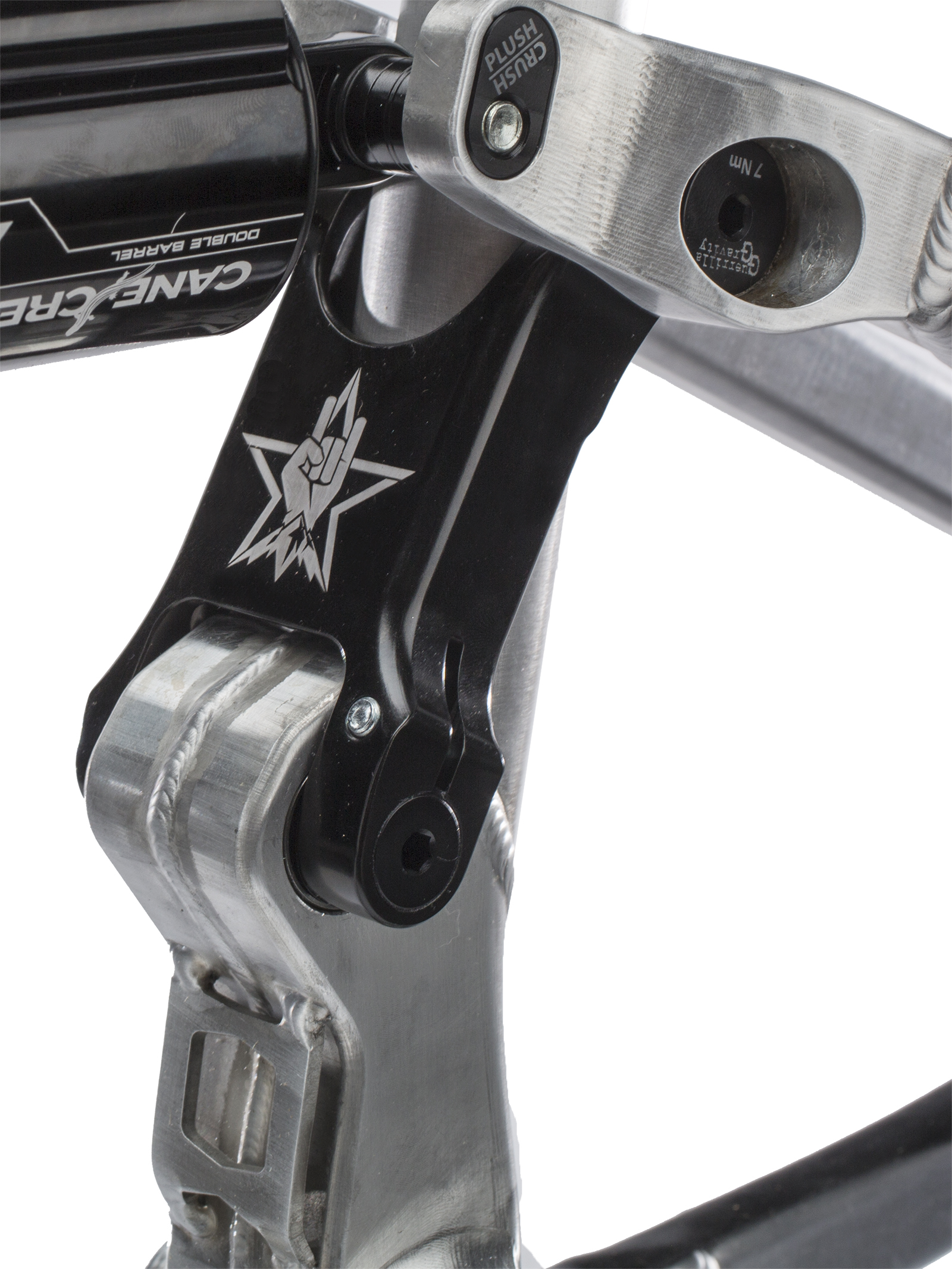
Thanks Lance for answering some questions for us. Nate Lewis hitting the trails. DownhillNews.com Canfield Jedi from Josef Duller on Vimeo. Setting the bikes sag was a snap with all adjustments on the Elka Stage 5 being easy to find. The first thing I noticed about the bike was it’s massive standover height. Also of note was the large complete bike weighing in at forty pounds. I brought the Jedi out onto the same trail I had the V-10 out on. The trail is littered with round rocks of various sizes. The Canfield responded very well to the large rocks and chatter on the trail. The tail end stayed glued to the ground and managed to make the trail feel smooth. The bike responded well to input and would switch lines easily. The next trail I brought the bike out on is a high speed run filled will rocks at the start, that eventually leads into tight switchback filled singletrack. Once again the bikes parallel link suspension smoothed out the terrain with ease. After carry speed down the trail for a few minutes I became comfortable on the bike. Entering the tight twisty section of trail the bike felt good and easy to manipulate. There were a few instances where the rearward travel of the suspension gave a weird feel in the saddle while taking hard tight turns. It was time to get the bike onto a root and dust filled trail. In total I did seven runs down this trail. It is short but you can carry a fair amount of speed down it. The more runs I made the more I felt comfortable on the bike. It ate up the roots and chunder like they were not even there. After this outing I was starting to feel really good about the bike.The Jedi hopped over obstacles and maneuvered around them as I asked it to. At the same time it had the ability to carry speed over obstacles if needed. I did not feel as comfortable on the Jedi as I did getting on the V-10. It took a little more saddle time to adjust to. There were a few things that could be improved with the bike. The first noticeable issue we had was rear tire clearance. We were running 2.5 WTB Dessents and wound up nearly rubbing the frame after the wheel went out of true. The second issue was chain guide clearance. It also began to rub the tire once the wheel became bent. Having the ability to adjust head angle, travel and progression of the frame would benefit the Jedi tremendously. I would have preferred to have the bike slightly slacker with an adjustable shock curve. Looks like the 2011 frame will offer these adjustments and also a 1.5 head tube so people can run the new Cane Creek Anglesets. Ian F I currently own several Canfield Brothers products that I run on my personal bike such as their unique, super-thin platform pedals and ultra-low rise direct mount stem. Having seen and experienced the quality craftsmanship and durability of these products I was excited to try out their full on DH bike. First thing you notice about the frame is how clean it is with all of the gussets and cnc’d junctions well thought out and very well designed. The next item that stands out to you is the unique chain guide set up with the roller located half-way up the seat tube which allows this bike to only be used with an MRP chain guide, not necessarily a bad thing, but limiting in some ways, as well as adding to chain drag. My first impression of the Jedi on the trail was mixed. I felt that the suspension was great for rocks and steep sketchy terrain, but difficult to pedal even at speed. The basic bottom line for this bike quickly became the steeper and gnarlier the trail the better the bike felt. The rearward wheel travel was evident when judging speed into technical sections because the bike felt noticeably faster than others I’ve ridden (which sometimes required more breaking into certain sections of trail). The real downside to this suspension seemed to be the pedaling. If the trail turns uphill for more than a split second you were in for some hiking, but seeing as how this is a downhill race bike and not an XC or all mountain bike that was perfectly acceptable. Cornering on the bike was interesting for me as it was a large frame for my medium size. Even with this element the bike cornered well. It did not seem as noticeably stable in corners as the tried and true DW link Sunday, but squatted enough to keep your CG low and the bike controlled in the corners. The large size kept me from really being able to “toss” the bike back and forth through tight switchbacks, but this seemed to be more of an issue with size and not design. Overall the bike was solid and felt well designed and built. I really liked the way it handled on the steeps and rocky fast terrain and would recommend it for someone looking for an all out DH race rig. It was a great bike to ride and could be a competitive race bike with a few wise component choices. Nate L I thought the bike rode amazing in a straight line at almost any pitch. Both the way it handled bumps and accelerated was impressive. While cranking hard out of a turn or getting off the back and letting the bike skip through a rough straight away, it was apparent that the rearward axle path and the Titanium Pulley Cog both were very effective and should be considered major strong points. The linkage provided a great pedaling feel and solid control while letting off the brakes and blowing through a rough section. The bike begins to have issues when changing directions. I couldn't get the bike to squat as much as I would like it to, giving is a steeper head angle and higher bottom bracket that weren't conducive to getting low and pushing through a turn. The drawback to the rearward axle path is it is slightly noticeable through technical low speed corners. When trying to push the rear end through a turn, you can feel the effective chainstay length increase, giving the sensation that the bike is getting longer and making it more difficult to turn. After getting familiar with the handling of the bike this quirk became much less noticeable. The top tube of the frame also felt slightly small considering it was a large frame; I am 6'1”. The leverage ratio of the frame also felt a little more progressive than I'd like. The beginning stroke when compressing the rear end would feel ideal, but it then quickly ramps up, making the bike feel like it has less travel then it actually does through choppy sections. The nice thing about this leverage ratio is it is great for absorbing huge impacts, so on drops and jumps with lousy landings, this bike will eat em' up. I think overall, Canfield made a solid bike, extremely well suited for a somewhat narrow section of riding within the downhill spectrum. If is perfect for someone who rides steep, rough trails with minimal corners and big hits, and it falls a little short when it come to tight, twisty low speed technical trails. Conclusion Overall the Canfield Jedi rated good amongst our testers. The overall build quality of the bike was excellent. This is a bike that can stand side by side in a lift line with any brand on the market and the attention to detail on the Jedi will be hard to beat. The bike went together very easy for the most part. The drivetrain requires some spacers to get the chainline running smooth. All the riders agreed that the bike excelled in the steep, rocky terrain. As the trails get more vertical and rock filled the bike just seems to get more into its element. The suspension system swallows large rocks with ease and does give the rider the impression that they have more travel to use. The rearward axle path takes some time to get used to riding. Some testers noticed it more than others but in tight switchbacks the rear of the bike would lengthen as the suspension cycled through its travel. With more saddle time this trait pretty much disappears. Canfield Brothers have been tweaking the Parallel Link suspension system for close to a decade now. Their latest offering is a rock eating rocket ship that turns the nastiest trails into sidewalks. There was no noticeable pedal feedback under braking or while pedaling through the rough stuff. Canfield’s downhill bike has been refined over the years and is now a full-blown race frame. Chris and Lance have spent the last decade working on their dream downhill bike. They have made alterations over the years and both feel as if they are very close to achieving that initial goal. With the alterations happening to the 2011 Jedi it is a sure bet that the boys are closing in on just that building the ultimate downhill bike. For 2011 the Jedi will feature a 11/2 headtube so people can run the new Cane creek Angleset headsets and get geometry adjustments out of the frame. It will also have the ability to adjust the progression of the frame via shock mounting positions. We would recommend this bike to a friend and have a feeling that with the updates to the newer model would do so even more. 2010 Canfield Jedi Grade Card 
2010 Santa Cruz V-10 Review
Thursday, September 29, 2011 at 9:14PM Welcome to the first complete bike review for www.downhillnews.com. The bike we are testing is a 2010 Santa Cruz V10 size medium with a 2010 Boxxer WC on the front and a Vivid 5.1 on the back. The build kit we chose was the DH Team it is the less expensive of the two offered from Santa Cruz. Check out what the build kit looks like below.We will be adding images, and information over the next few weeks so check back to see what we think of Santa Cruz's premiere downhill machine the 2010 V-10.
- Rear Der. Shimano M810 GS Saint
- Shifters Shimano M810 RF Saint
- Crankset Truvativ Holzfeller 38 tooth
- BB Truvativ Howitzer Team
- Chainguide E13 SRS
- Cassette Shimano HG 8011-32
- Chain Shimano HG 73 XT
- Brakes Avid Elixir R 185mm, F 203mm
- Brake Levers Avid Elixer R
- Bars Easton Havoc Low 31.8
- Stem FSA Direct Mount
- Headset Cane Creek S3 1 1/8 Double XC Flush
- Seatpost Thomson Elite
- Saddle WTB Silverado Team
- Wheels DT FR600 rims laced to DT 340 rear hub and chub front hub with DT 14 guage spokes and brass nipples
- Tires Kenda Nevegal 2.5 wire bead and Kenda DH tubes


The 2010 Santa Cruz V-10 geometry.
Santa Cruz Syndicate riders walk you through setting up the Santa Cruz V-10
Below is Santa Cruz's description of the the bike along with a breakdown of the VPP suspension system that is used on it.
Overall World Cup champion. Overall World Cup team trophy. Junior World Cup overall. Junior World Champion. Silver medal, senior World Championship. 4th place, senior World Championship. A V-10 on every single World Cup podium. To say that the 2008 season was a good one for our flagship downhill bike is a bit of an understatement. Beneath the guiding hands of Santa Cruz Syndicate riders, the V-10 has become the definitive downhill weapon of this era. The VPP suspension has been refined to offer 254mm of seemingly bottomless travel while tracking with precision down the most demanding and technical courses that can be found anywhere in the world. Shock rates and ride characteristics have been honed to precision, creating the ultimate podium-seeking missile.
VPP Linkage:VPP suspension designs balance different forces toeliminate unwanted compression without limiting bump absorption.The downward force on your pedals pushes most full suspension bikes down, resulting in unwanted suspension compression. VPP bikes use a patented link configuration and axle path to apply some of the pulling force from thechain to counteract that motion caused by pedaling.Because the forces are balanced, VPP bikes remain able to absorb bumps when pedaling, unlike other designs that effectively lock out the rear suspension by applying too much chain pulling force. What you end up with is plushtravel with no pedal-induced compression or lockout and no need for manual lockouts or other compromises. VPP Sag and Active Suspension: VPP's balance of counteracting pedaling and bump forces is optimized at the recommended "sag" point. Sag is the amount the suspension compresses when the rider is in a neutral position. For example, when sitting on the bike at rest or riding on smooth terrain. This point is about 1/4 to 1/3 of the way into the suspension travel. VPP bikes are designed to be ridden with sufficient sag to provide truly active suspension, meaning the suspension compresses (positive travel) and extends (negative travel) with rises and dips in the trail. A VPP owner rides in a suspended "pocket" with ample positive and negative travel available to maintain traction and momentum in all trail conditions, even while pedaling. VPP Shock Rates: Shock rate plays a huge part in any suspension frame design. Shock rate refers to how much the shock compresses for a given amount of rear wheel travel. A "falling rate" design is harder to compress at the beginning of the travel than at the end of the travel. A "rising rate" design is the opposite, easier to compress at the beginning than at the end. By experimenting with hundreds of different pivot placements and linkage designs, our engineers tune the shock rates on VPP bikes to both rise and fall at different points throughout the suspension travel, tailoring the attitude of the bike for different conditions and uses and maximizing the benefits of the VPP linkage and axle path. It takes a long time but it shows in the performance of each bike. Frame Construction: A great suspension design by itself is not enough to make a great bike. To realize the potential of VPP technology, every frame is carefully engineered without compromise in materials or construction methods. We start with custom tubesets made from the strongest and lightest aluminum alloys available. Then we use a variety of advanced design and construction techniques, including custom part design, strategic gusseting, modified weld bead profile and shot-peening. Prototypes undergo rigorous laboratory and real-world testing. Each frame is analyzed for high-stress areas when pushed to the limit. Geometry is tested, tweaked, and tested again. Every part of every frame receives an obsessive amount of attention to minimize weight, maximize strength, durability, and serviceability. We've designed custom double-row angular-contact full-complement bearings that are lighter and stronger than anything else out there. The shocks that come on our frames are valved specifically for each model to make the ride quality that much better. We don't spend our time writing frivolous patents or coming up with silly acronyms for the innovations we employ. We'd rather go for a ride, wouldn't you?
Check out what Santa Cruz says HERE
Santa Cruz bikes started their foray into the downhill market with the 1998 Super 8. This was a basic single pivot design created out of round tubes and was TIG welded using 6061 T6 aluminum. They offered it in three sizes and it boasted 7.5” of rear wheel travel.
The 2000 model year saw a dramatic change in the Super 8. Gone was the round-tubed frame and in its place was a massive configuration of double-butted 7005 series aluminum. These frames also increased their rear travel up to 8.5”. These frames where substantially heavier. Yet proved to be much more durable than the previous designs.
In 2002 Santa Cruz ventured away from their more traditional single pivot design and adopted a new to them design they purchased and refined from Outland. The suspension system would come to be known as, "VPP" or Virtual Pivot Point.
The VPP linkage was attached to a still beefy frame when they released their new downhill bike called the V-10. It was TIG welded from custom butted 6066 aluminum. Out on the trails the bikes road great but where somewhat heavy. They also had a floating rear brake at this point. Eventually Santa Cruz would dial in the linkages and eliminate the need for any floating brake adapters on their premiere downhill bike. Having 10" of rear wheel travel allowed the bikes to easily cover rough ground at very high rates of speed.
Overall the reviews for the new suspension system were very positive. Bikemagic was one of the first media outlets to test an early model prototype of the 2002 V-10 and this is what they concluded.
“Ridiculously succulent travel and traction that refused to even get slightly unsettled when we were riding it as hard as we could, coupled with instant drive and pick up wherever you are in the stroke. We don't generally ride rigs this big purely because the invincible long travel amusement wears off very quickly on slopes of less than 1 in 2 but the V10 was an absolute blast even on flat and barely downhill sections. We simply haven't ridden anything near as sharp with this much travel, and the V10 genuinely has power responses that would shame many XC bikes.”
http://www.bikemagic.com/bike-reviews/uk-exclusive---we-ride-the-santa-cruz-v10/2367.html
So the new suspension did seem to allow more wheel travel without hindering pedaling performance. In fact just about all that rode the VPP bikes claimed they had some of the best pedaling characteristics of any bike they had ridden short of a hardtail XC racer as the quote above from Bikemagic implies.
There have been a total of three versions of the Santa Cruz V-10 since the initial 2002 model was released. The 2002-2004 version consisted of tubed construction. Then in the middle of 2004 they switched to a monocoque style frame. Weight began to become a big concern and Santa Cruz altered the V-10 over the years to shed excess pounds. The 2007 version received a carbon upper link, new dropouts, and completely revised frame tubing. The only parts it shares with the earlier 2005 version are the seat and chainstay yokes. The newer frames post 2007 shed just over a pound from earlier models and also received revised linkage rates and the bike now sits higher with less sag to give it a more lively feel.
Over the eight years that the Santa Cruz V-10 has been in production it has undergone a dramatic transformation. It has become more refined over time by loosing weight, getting better leverage ratios and getting its geometry tweaked. Some of the sports biggest names have helped to transform the 2010 Santa Cruz V-10 into the bike it is today. Riders such as Marla Steb, John Waddell, Nathan Rennie, Steve peat, Greg Minnar and Josh Bryceland have all had input into the bikes design over the years. These are all world-class athletes competing at the top level. Something that feels good to them may not translate very well into the everyday riding of the average downhiller. That’s what we at Downhillnews are here to determine. How does the 2010 Santa Cruz V-10 feel in the hands of the average rider on downhill trails that range from smooth and fast to steep, rocky and technical?
The first trail that we took the Santa Cruz V-10 on was located just in town. This trail is a short one that is filled with rocks ranging from golf ball on up to basketball sized “boulders”. The trail is not particularly difficult unless you are carrying speed the whole way through it. Typically people will encounter flats, bent rims, rebound adjustment problems and the occasional dismount while riding this trail.
Three totals riders went along on the first outing. This included Leland O, Ian F and myself Ian W the cameraman and resident slowpoke. We made good time up the hill and Leland was the first to go. Leland rides very hard and fast he is definitely not super smooth. He did three runs and made slight rebound adjustments as he rode. He thought the bike felt very nimble, light, and ate up anything in its way.
Ian F went next and he spent the most time on the bike. He tends to be a little more smooth with a long background in BMX and ended up doing about five total runs. Going a little further up the hill opens up the trail to a high-speed section so we headed there first. He also comment on the bikes maneuverability and mentioned how quickly he felt comfortable on it.
I went last and set the camera up for Ian to nab some shots. Weighing in at about 210 pounds fully kitted I am on the larger side. My concerns with most bikes, and fork setups are the overall stiffness of the package. At this point both the frame and fork felt very stiff with little to no flex. The VPP suspension did its job by gobbling up anything I managed to run over. The suspension was very good at keeping the rear wheel on the ground as I managed to drag the rear brake over large rocks. Hopping the bike over and onto obstacles was a snap.
The second trail that we brought the 2010 Santa Cruz V-10 out onto was of the much more technical variety. This trail is very steep, rocky, with loose dirt and has many off camber corners out of drops that are blind. It definitely has a high fear factor surrounding it and is the perfect trail to test a full-blown World Cup downhill race bike on. If a bike does well here and provides confidence to riders there is probably not a racecourse in the world that it could not do the same on.
Nate L was the tester for the day. His current bike is a 2008 Santa Cruz V-10 with a Fox 40 on the front and a RC4 on the rear. So the transition for him was almost seamless. I began walking down the trail and set up lights at the very first section. Each feature along the trail we stopped and sessioned until we made our way down the whole trail. Over the course of the day he pushed up each feature numerous times.
Suspension is an area that Nate has now got dialed in very well on his personal bike. He decided for the first run to just leave it as it was from our previous test session. Instantly he noticed that the rear Rock Shox Vivid 5.1 had a much lower spring rate than is recommended by Fox. Also of note was the stiffness that the 2010 Boxxer WC seemed to offer. The front and rear of the bike followed the terrain very well and ate up the small stuff very well.
The biggest difference he noticed between his 2008 and the 2010 was the overall stiffness of the frame. There was no lateral play in the rear end and it tracked remarkably well. He felt the bike handled the trail very well and was in its element while being pushed to the edge down steep, rocky, shoot filled trails.
RIDER SUMMARY
Leland O
I was able to borrow the V10 from Ian for a week, which allowed for some killer trail riding. I was able to ride three trails during this time, which gave me an overall feel for the bike. I rode Madonna Mountain’s Rock Garden trail, a connector trail from Madonna Mountain towards Irish Hills, and a trail located on the West Cuesta Ridge. These trails are all located in San Luis Obispo, CA.
First of all, I want to say that the bike was small for me. I am 6’-2” and the medium sized frame felt too small. However, the bike still rode extremely well, especially through loose, rocky terrain. My favorite part about the bike was that the rear end always stuck to the ground, no matter what the terrain. The rear end travel worked extremely efficient through rocks and ruts. The bike was also quick to change direction or be lifted off the ground when I needed an instant response.
The main aspect of the bike I didn’t like was the choice of tires for the build package. The bike came with Kenda tires, which hindered the bike in the loose and rocky terrain, found in San Luis Obispo. This was the only complaint; otherwise the build consisted of Avid and Saint components, which worked very well.
Ian F
Well, I came off one of the most hyped up DH rigs in recent history, the Iron Horse Sunday, made famous by Mr. Sam Hill and on to the current world champion’s race rig the Santa Cruz V10. Anything less than amazing would have been a complete disappointment. I have ridden quite a few different bikes in the day from Intense, Yeti, Commencal, Tomac, Kona, Giant, Orange, a few Santa Cruz’s among others. My last experience on a V10 wasn’t the best either; it was an early model with a head angle like a chopper motorcycle and super soft spring set up that creaked more than a bed in a cheap motel. The last new bike I had given a try was one of the new Trek Session 88s and I was fairly impressed with the overall feel of that bike to the point that I was ready to put down the money to get one for myself and replace the rusty, but trusty Sunday.
The V10 felt natural right off of the bat. The medium size of this bike was a true medium and not a warmed over small or large. The top tube felt on the long side and fit perfectly for me at 5’8”. Coming off of a Sunday with a notoriously low center of gravity (an advantage in cornering) I was interested to see how the turn in and “pop” out of the corners would be on a bike with a higher bottom bracket and WAY more travel. The V10 had great turn in and felt quite lively for a full on DH bike in the corners making the narrow, tight twisty corners a blast to rip through along with the long berms and wide open flat corners of a typical DH track. The more I rode it the more this versatile feeling seemed to follow through to every aspect of the bike.
The suspension was very plush, but not over the top like some DH bikes from back in the day (i.e. Karpiel Armageddon). The VPP design also made pedaling sections fairly easy and painless, not quite as good of a pedaling bike as the Sunday, but right up there with the best. The rear end was very predictable and the head angle made everything from the steepest gnarliest sections to the mundane completely ride-able and enjoyable. Even in the air, the V10 never felt over the top with travel, although you had to work to get it off the ground, I never felt I was near the suspensions limits even while hitting some fairly large drops with minimal transition. The V10 really felt like a bike you could take out on a normal trail ride in the morning and be blasting down world cup tracks in the afternoon at full race pace.
My only complaint about the bike was that I think the head tube should be a 1 ½ instead of 1 1/8. I feel like that should be a no brainer on a bike that sees as much abuse as a DH race rig. However, that being said the 2010 Santa Cruz V10 was a great bike to ride and race. It felt at home in any situation and was a fantastic ride for anyone looking at world cup domination or just a bike that can take anything you would want to throw at it…
Ian W
My last downhill bike was a2003 Intense M1. I have owned a long list of bikes starting with a 2000 Orange Patriot LT, 2001 Kona Stab Primo, 2001 Specialized Team DH, 2002 Karpiel Disco Volante, 2002 Turner DHR, 2003 Intense M1 2005 Intense M3, and a 2006 Iron Horse Sunday. The Turner out of that group was for sure the stand out. It had been about one and a half years since I had been on a downhill bike and being able to throw my leg over a 2010 Santa Cruz V-10 had the heart rate going.
My first ride on the bike brought me down a very familiar local trail. It is not very steep but littered with rocks ranging in sized from golf balls to basketballs. They are the round variety of rocks that can get slippery when moisture is on the ground. I instantly felt comfortable on the bike it went where I aimed it and the first few runs I managed to run it over all the stuff people normally try and avoid. The bike was light it weighed 39 pounds with pedals so getting the front end up and over obstacles is a breeze. The next trail I went on is high speed and filled with loose rock.
Fast riders on downhill oriented bikes can easily break 30 mph going down this trail. The trail is corner filled and has ample rocks on it to keep riders worried about pinch flats. The bike started gathering speed and just wanted to keep gaining. I used the brakes to rein it in to a more comfortable rate of speed. The bike simply liked to go fast.
Being able to hop over things while going down the trail is vital when trying to avoid flats and dented rims. The V-10 had no problem hopping over large rocks and water bars. This bike is pretty easy to get off the ground. That was one concern I had with it before we starting riding it. Exactly how maneuverable is this ten-inch travel downhill bike going to be?
Well it turned out to be very lively. It was very easy to hop, change direction and move the bike around while in the air. The lively feel of the bike was a relief and proved that a good design such as Santa Cruz’s VPP can be altered slightly every year to produce an end result that is finely tuned and truly refined. After the fast rocky top section the trails turns into tight singletrack that is littered with both rocks and corners. Cornering is my weak point so when a bike feels comfortable under me while going through a turn I know it is doing something right. The bike twisted its way down the trail devouring whatever it ran over and railing the turns even with me as the rider.
Nate L
The major impression I got from the first ride was how responsive the bike felt, and I think this is a huge deal considering how much sag the bike is set up to have. Being able to sit so far into your travel lets the bike do the work in keeping your wheels glued to the ground and V10's have always been good because of how much traction and control this gives them.
A major draw back in riding so low in your travel is you feel the trail less; the bike dampens all the impacts between the rider and the contours of the trail. In past generations of the V10, this has given the bike a mushy feel when pumping a turn or catching backside through a transition. Between Santa Cruz's first generation and this one, and the valving of the Rock Shox Vivid shock the mushy feel is gone! When you press the rear end into a transition, you feel the bike accelerate and now the front end comes up with a subtle motion rather then an exaggerated heave.
The bike feels much more agile and if I didn't know better I never would have guessed that it had 10 inches of travel sagged at 30%. Long story short it feels like your getting the best of both worlds, you get a nimble, agile feel and a ton of traction and control from all of that negative travel.
CONCLUSION
Overall the Santa Cruz V-10 rated very high among the testers. The build quality of the bike was excellent which makes assembly easy and gives the owner a sense of pride in their new bike. There has been some debate on various forums over the last few years about where the V-10 is being made these days and to those that are wondering it is still made in the USA.
All testers agreed that this bike was very maneuverable and responded instantly to rider inputs. Having the ability to change lines, and hop over obstacles when necessary is a blessing. The V-10 allows smooth riders to finesse their way down the trail with smooth lines and avoiding all obstacles on the way down. At the same time the suspension system and copious amounts of rear wheel travel allow plow riders to hammer their way down the trail.
Santa Cruz has been refining their VPP design since 2002 and it truly shows on their newest bike. It is now a slim, agile, functional WC downhill race bike. The VPP’s of the past seemed glued to the ground with little ability to get them off unless launching a large jump. That is no longer the case with Santa Cruz’s new variation. The suspension is very effective at gobbling up anything we ran over with it. There was no noticeable feedback in the pedals and the bike could be pedaled through large rocks fields. The suspension does what it should by allowing the rider to worry about what line to choose or the corner up ahead. All the testers loved the way the suspension handled the varying terrain that was thrown at it.
This is a bike that has undergone slight alterations over the past nine years to become what it is today. Santa Cruz takes a different approach to their bikes than most other companies. There is no huge marketing team claiming they have the latest and greatest suspension system out. They started off with a good design and slowly transformed it. It is highly refined from the original version and we would have no problem recommending it to a friend.